Ally Louks: The Cambridge Scholar Who Made Smell Go Viral
The English literature scholar became widely known after her Cambridge PhD on smell drew huge online attention. Her work now reaches beyond academia through teaching, public writing and a forthcoming book.

Introduction
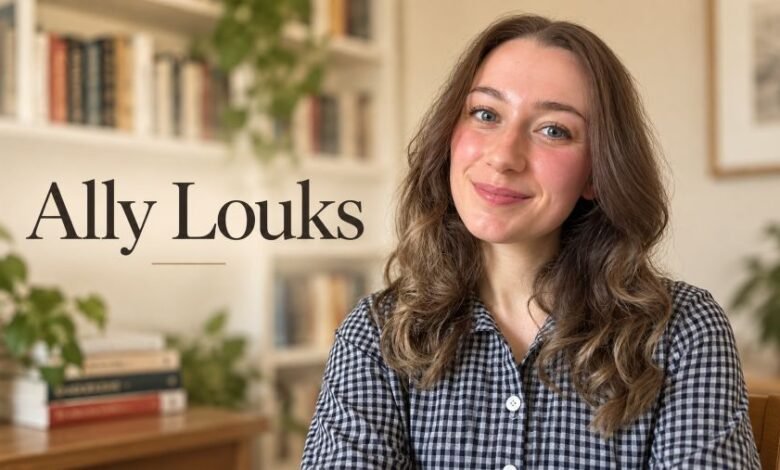
Ally Louks is a literary scholar, public academic and English Literature supervisor at the University of Cambridge. Her research focuses on smell, culture, literature and sensory studies.
She became widely known after sharing news of completing her Cambridge PhD. Her thesis, Olfactory Ethics: The Politics of Smell in Modern and Contemporary Prose, examines how language about smell can connect with social judgments involving class, gender, race and other identities.
The post went viral. Very viral.
What began as an academic milestone suddenly put a specialist area of literary research before a huge public audience.
Quick Facts
| Fact | Details |
|---|---|
| Professional name | Dr Ally Louks |
| Thesis record name | Amelia Louks |
| Profession | Literary scholar, public academic and university supervisor |
| Main field | English literature and sensory studies |
| Research focus | Smell, culture, literature and social meaning |
| Undergraduate study | BA English, University of Exeter |
| Graduation year | 2019 |
| Master’s study | English Literature: Issues in Modern Culture, UCL |
| Doctoral study | University of Cambridge |
| PhD thesis | Olfactory Ethics: The Politics of Smell in Modern and Contemporary Prose |
| Current verified work | English Literature supervisor at Cambridge |
| Literary representation | Janklow & Nesbit UK |
| Forthcoming book | Under Your Nose: The Pleasures and Politics of Smell |
| UK book release | 22 April 2027 |
Cambridge’s research repository records the thesis author as Amelia Louks, while her academic, media and publishing work uses Dr Ally Louks.
Education and Academic Background
Louks studied English at the University of Exeter, graduating with a BA in 2019.
She later completed a master’s degree in English Literature: Issues in Modern Culture at University College London.
Cambridge came next.
She undertook a PhD in English Literature: Criticism and Culture at the University of Cambridge. Her doctoral work focused on the way smell appears in literature and how ideas surrounding scent can affect perceptions of people and social groups.
Cambridge lists Kasia Boddy and Steven Connor as advisers for the thesis.
This was serious literary research.
It pulled material from modern and contemporary writing while connecting literature with wider questions about human reactions, prejudice and social status.
What Was Ally Louks’s PhD About?
The title caught attention fast:
Olfactory Ethics: The Politics of Smell in Modern and Contemporary Prose.
But the work goes far beyond asking whether something smells pleasant or unpleasant.
Louks studied olfactory discourse — basically, the language, ideas and assumptions people attach to smell.
Her thesis asks how those ideas appear in literature and how they can affect judgments involving class, gender, race, sexuality and distinctions between humans and other species.
One chapter looks at class and homelessness through works including George Orwell’s The Road to Wigan Pier, Iain Sinclair’s The Last London and Bong Joon Ho’s Parasite.
Another section considers race and gender through writing by Toni Morrison, Bernice McFadden and Raven Leilani.
Other parts discuss writers such as Virginia Woolf, J. M. Coetzee and Rachel Yoder.
The basic idea is clear.
Smell can carry social meaning. Literature can record that meaning, question it or change the way readers think about it.
Passing Her Cambridge PhD
Louks completed a major academic milestone in late 2024.
The University of Cambridge Faculty of English confirmed that she passed her PhD viva with no corrections.
That detail matters.
A viva is the oral examination used to test a doctoral thesis. Passing without corrections meant her examiners did not require changes to the dissertation following the examination.
Louks celebrated the result online with a photograph of herself holding the bound thesis.
Then everything changed.
Why Did Ally Louks Go Viral?
Her thesis announcement spread far beyond academic circles.
The unusual subject caught people’s attention, but much of the online discussion reduced a long research project to its title.
Cambridge later publicly supported Louks after she received hostile and misogynistic responses to the viral post.
The university defended the academic rigour behind her work and confirmed that she had passed her viva without corrections.
The reaction had another effect.
Suddenly, a specialist researcher working on literary smell studies had an audience far outside Cambridge.
Louks began explaining her work to more general readers and listeners.
That shift has become an important part of her public profile.
Ally Louks’s Current Work
As of September 2026, Ally Louks is publicly listed as a Supervisor in English Literature at the University of Cambridge.
Her University of Exeter alumni profile says she teaches undergraduates through one-to-one supervisions and larger group seminars.
Her literary agency describes her work within sensory studies, with particular attention to smell, culture and literature.
So her career now runs across two connected areas: academic teaching and research, plus public writing for readers outside university departments.
Under Your Nose
Louks is moving further into public-facing nonfiction with Under Your Nose: The Pleasures and Politics of Smell.
Penguin currently schedules the book for publication by Chatto & Windus on 22 April 2027 in the UK.
The hardback listing is currently 384 pages.
The book takes the subject beyond literary criticism.
It draws from science, history, literature and popular culture to discuss why certain smells comfort or repel us, how smell connects with memory and identity, and how cultural ideas affect the way people interpret scent.
That makes sense as a next step.
Her doctoral research started within literature. The book takes those questions into everyday life.
From Academic Research to Public Writing
Louks’s rise to wider attention is unusual.
It did not start with television, entertainment or a planned publicity campaign.
It started with a PhD.
Her literary agency describes her as a public academic interested in bringing scholarly work to wider audiences through writing, broadcasting and social media.
That public-facing work fits her research well.
Everyone experiences smell.
Far fewer people stop to think about how culture affects reactions to it.
Her work asks a simple but interesting question: are all reactions to smell purely natural, or can social ideas teach people what to accept and reject?
That is where her research gets interesting.
Why Ally Louks’s Research Matters
Smell can feel automatic.
Something seems pleasant. Something else seems disgusting.
We react quickly.
Louks’s work asks readers to check what sits behind those reactions, especially when descriptions of smell become attached to groups of people in literature and culture.
Her thesis connects those questions with literary treatments of class, racism, misogyny, desire and social exclusion.
That gives the topic a much wider scope than the viral discussions around the thesis title sometimes suggested.
It is literary criticism first.
But it also talks about everyday human behaviour.
An Interesting Detail About Her Thesis
Readers searching for the complete dissertation may hit a barrier.
Cambridge’s repository lists the primary thesis file as embargoed until 6 November 2028.
The repository still provides the title, academic information and a detailed abstract explaining its arguments and chapter structure.
So public discussion currently relies mainly on official university material, Louks’s own explanations and published interviews rather than unrestricted access to the full thesis.
Final Thought
Ally Louks became known outside academia almost overnight, but the work behind that attention took years.
She studied at Exeter, UCL and Cambridge, completed a PhD on olfactory language, passed her viva without corrections and now teaches English Literature at Cambridge.
Her research has also opened another path: explaining smell and its social meaning to ordinary readers.
The next major step is already set.
Under Your Nose is scheduled for April 2027, bringing the ideas behind her academic research to a much wider audience.
Frequently Asked Questions
Who is Ally Louks?
Ally Louks is a literary scholar, public academic and English Literature supervisor at the University of Cambridge.
What is Ally Louks known for?
She is best known for her Cambridge PhD research on smell in modern and contemporary literature and the viral attention surrounding her thesis announcement.
What is Ally Louks’s PhD thesis called?
Her thesis is titled Olfactory Ethics: The Politics of Smell in Modern and Contemporary Prose.
What does Ally Louks research?
She studies smell, literature, culture and the way olfactory language can connect with social ideas and identities.
Where did Ally Louks study?
She studied English at the University of Exeter, completed postgraduate study at UCL and earned her PhD at the University of Cambridge.
Does Ally Louks work at Cambridge?
Yes. As of September 2026, reliable professional sources identify her as a Supervisor in English Literature at the University of Cambridge.
Did Ally Louks pass her PhD with no corrections?
Yes. Cambridge’s Faculty of English confirmed that she passed her viva with no corrections.
Is Ally Louks writing a book?
Yes. Penguin lists Under Your Nose: The Pleasures and Politics of Smell for UK publication on 22 April 2027.