Julian Hearn Biography: How the Huel Founder Built a New Category in Modern Nutrition
How a digital entrepreneur transformed the way people think about food

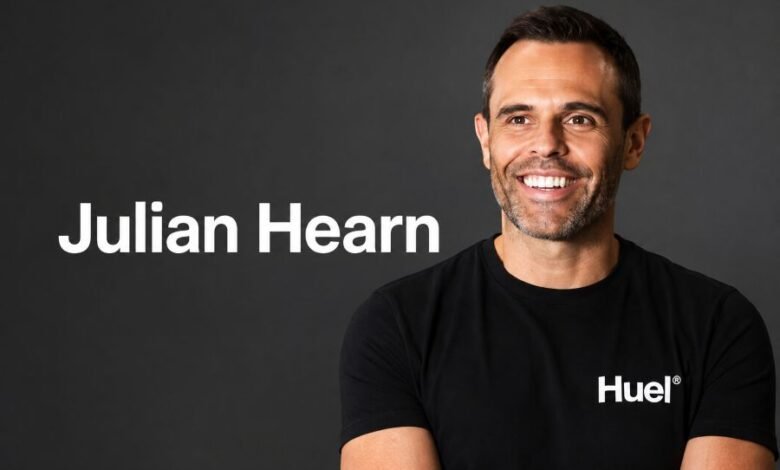
Introduction
Julian Hearn did not enter the food industry through traditional nutrition science, restaurant businesses, or manufacturing. His journey began in digital commerce, where he learned how online businesses attract customers and grow rapidly. Years later, those same skills helped him build Huel, a company that challenged long-standing ideas about what a meal could look like.
Huel’s success was based on a simple but controversial idea: many people struggle to consistently prepare balanced meals because of time pressure, busy lifestyles, and changing work patterns. Instead of asking consumers to spend more time cooking, Hearn focused on creating a product designed to provide complete nutrition in a convenient format.
The result was one of the most recognised meal replacement brands in the world. However, Hearn’s story is not only about creating a successful company. It reflects a wider shift in consumer behaviour, where technology, health awareness, convenience, and sustainability are increasingly influencing how people approach food.
His career also raises important questions: Can nutrition be simplified without losing the benefits of traditional meals? Can a digital entrepreneur successfully disrupt a highly established industry? And what lessons can other founders learn from Hearn’s approach?
Quick Facts: Julian Hearn
| Category | Details |
|---|---|
| Full name | Julian Hearn |
| Known for | Founder of Huel |
| Industry | Nutrition, consumer products, e-commerce |
| First major business | PromotionalCodes.co.uk |
| Founded Huel | 2015 |
| Previous expertise | Digital marketing and online businesses |
| Business focus | Convenient, nutritionally complete food products |
Early Career: Building Expertise in Digital Commerce
Before becoming known for Huel, Julian Hearn developed his entrepreneurial experience through online businesses.
His first major success came from founding PromotionalCodes.co.uk, an online voucher and discount platform. The company operated during a period when online shopping was expanding rapidly, and consumers were increasingly using the internet to compare prices and find deals.
The business helped Hearn develop skills that later became valuable when building Huel:
- understanding online consumer behaviour,
- acquiring customers through digital channels,
- building a direct relationship with users,
- scaling an internet-based business.
PromotionalCodes.co.uk was eventually sold in 2011, giving Hearn both financial resources and practical experience before his next venture.
This background explains an important part of his later success. Huel was not created by someone entering the market purely from a food manufacturing perspective. It was created by an entrepreneur who understood how modern consumers discover, purchase, and interact with products online.
The Personal Experiment That Became Huel
After leaving his previous business, Hearn became increasingly interested in fitness, nutrition, and improving personal performance.
According to interviews about his entrepreneurial journey, he experimented with different approaches to eating and noticed a problem: maintaining a balanced diet often required significant time, planning, and effort.
The question that shaped Huel was not simply “How can food be made faster?” Instead, it was:
How can people consume complete nutrition while reducing the complexity of everyday meal preparation?
This led Hearn toward the idea of creating a nutritionally complete food product containing essential nutrients in a convenient format.
The concept reflected a growing consumer trend. Many people were already looking for solutions that combined health, efficiency, and convenience. Huel attempted to position itself between traditional meals, supplements, and older-style diet products.
Launching Huel and Creating a New Food Category
Huel was founded in 2015 with the goal of creating a complete food product that could replace some traditional meals.
The company’s name comes from combining “human” and “fuel,” reflecting the idea that food is not only about taste but also about providing the body with necessary nutrition.
Unlike many older meal replacement products, Huel positioned itself around everyday nutrition rather than only weight loss. The company focused on:
- balanced nutritional content,
- convenience,
- affordability compared with some ready-made meals,
- reduced food preparation time.
This approach helped Huel appeal to a different audience, including professionals, entrepreneurs, fitness-focused consumers, and people with demanding schedules.
The company’s growth showed that there was demand for alternatives to traditional eating habits. Huel reported rapid expansion, reaching customers internationally and selling millions of meals during its early years. These figures were reported through company announcements and business media coverage rather than independent public financial reporting.
Why Huel Grew Faster Than Traditional Food Brands
One of Hearn’s biggest advantages was applying digital business methods to the food sector.
Traditional food companies often rely heavily on supermarkets, distributors, and physical retail channels. Huel initially focused strongly on a direct-to-consumer model, allowing the company to communicate directly with customers.
This strategy provided several advantages:
Direct customer relationships
Selling online allowed Huel to collect customer feedback quickly and improve products based on user responses.
Digital marketing expertise
Hearn’s previous experience in online businesses helped the company understand how to build awareness without relying only on traditional advertising.
Community-driven branding
Huel developed a strong identity among customers who viewed the product as part of a lifestyle focused on efficiency, health, and productivity.
This illustrates a broader change in consumer businesses. Modern brands increasingly compete not only through products but also through communities, online experiences, and customer relationships.
Scaling From Startup to International Brand
Huel’s growth attracted significant investor attention.
In 2018, the company raised investment from Highland Europe. Media reports stated that the funding valued the business at approximately £220 million. Because Huel is privately held, many financial details are based on reported investment information rather than publicly audited company accounts.
The company expanded beyond the UK into international markets, becoming one of the best-known names in the meal replacement sector.
However, rapid growth created a different challenge: moving from a founder-led startup into a larger organisation.
Many entrepreneurs are effective at creating ideas and launching products, but scaling requires different skills, including:
- building management teams,
- developing operational systems,
- maintaining company culture,
- making decisions through larger organisational structures.
Hearn has discussed this transition and the importance of bringing experienced leadership into the company as it expanded.
The Debate Around Meal Replacement Products
Although Huel has achieved commercial success, the broader meal replacement category continues to face discussion among nutrition experts and consumers.
Supporters argue that nutritionally complete products can provide convenience and help people maintain structured eating patterns, especially when time is limited.
Critics point out that food is not only about nutrients. Traditional meals also involve:
- social interaction,
- cultural traditions,
- enjoyment,
- variety of eating experiences.
The debate is therefore not simply whether meal replacements are good or bad. The more important question is how they are used.
A convenient nutrition product may solve certain problems, but it does not necessarily replace every role that food plays in human life.
Conclusion: The Entrepreneur Who Applied Digital Thinking to Food
Julian Hearn’s journey is best understood as the story of a digital entrepreneur entering a traditional industry and applying modern business principles to an old human need.
His success with Huel was not created by one idea alone. It combined consumer insight, online marketing expertise, product positioning, and the ability to recognise a changing relationship between people, time, and food.
The lasting lesson from Hearn’s career is not simply that a meal replacement company became successful. It is that major business opportunities often appear when entrepreneurs notice everyday problems that established industries have overlooked.
Frequently Asked Questions (FAQ)
Who is Julian Hearn?
Julian Hearn is a British entrepreneur best known as the founder of Huel, a company specialising in nutritionally complete food products.
What company did Julian Hearn create?
He founded Huel in 2015, a brand focused on convenient nutrition and meal replacement products.
What did Julian Hearn do before Huel?
Before Huel, he founded PromotionalCodes.co.uk, an online voucher platform that became his first major entrepreneurial success.
Why was Huel different from traditional meal replacement brands?
Huel positioned itself as everyday nutrition rather than only a diet product, focusing on convenience, balanced nutrition, and modern lifestyles.
What can entrepreneurs learn from Julian Hearn?
His career highlights the importance of understanding customers, using digital distribution, and applying skills from one industry to create opportunities in another.