Claire Castro: The Lawyer and Broadcaster Behind the Presidential Communications Office
How a lawyer and broadcaster became one of the key voices in the Marcos administration’s presidential communications team.

Introduction
Government communication is often tested during moments of pressure. The person responsible for explaining presidential decisions must do more than deliver statements — they must answer questions, clarify policies, and communicate accurately in a fast-moving media environment.
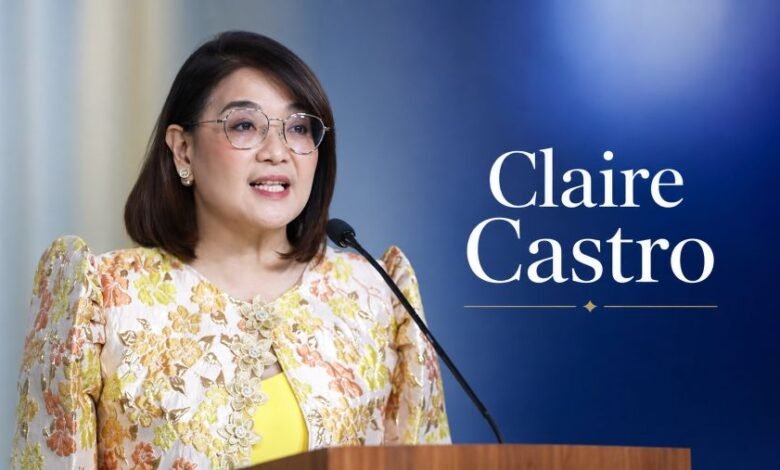
Claire Castro became one of the most visible figures in Philippine government communication in 2025 after being appointed Undersecretary of the Presidential Communications Office (PCO) and Palace Press Officer under President Ferdinand “Bongbong” Marcos Jr.
Her career stands out because it combines three areas that rarely come together in one professional journey: law, broadcasting, and government communication. Her background helped shape her role as a public official responsible for explaining the administration’s positions and engaging with journalists.
Quick Facts About Claire Castro
| Detail | Information |
|---|---|
| Full Name | Clarissa “Claire” Angeles Castro-Seechung |
| Position | Undersecretary of the Presidential Communications Office and Palace Press Officer |
| Appointed | February 2025 |
| Administration | President Ferdinand Marcos Jr. |
| Profession | Lawyer, broadcaster, government communications official |
| Known For | Malacañang press briefings and official government communication |
A Career Built Around Communication
Before joining the government, Claire Castro developed experience as a lawyer and media personality. Both professions require strong communication skills, whether presenting legal arguments or explaining complex topics to a wider audience.
Her legal background provided training in careful interpretation and structured reasoning. Meanwhile, her broadcasting experience exposed her to live discussions, public questions, and the demands of communicating clearly under pressure.
These skills became particularly relevant when she entered a role where every statement could attract public attention.
Joining the Presidential Communications Office
In February 2025, President Ferdinand Marcos Jr. appointed Claire Castro as Undersecretary of the Presidential Communications Office and Palace Press Officer.
The appointment placed her at the center of Malacañang’s communication operations. As Palace Press Officer, she became responsible for engaging with journalists, participating in press briefings, and communicating official government positions.
The role is important because the PCO serves as a bridge between the executive branch and the public. It helps explain government programs, presidential activities, and official responses to national issues.
The Responsibilities of a Palace Press Officer
A Palace Press Officer works in a demanding environment where speed and accuracy matter.
The position requires:
- Answering questions from journalists
- Explaining government policies
- Providing official information
- Responding to current issues
- Maintaining communication between the Palace and media organizations
Modern government communication is no longer limited to traditional press conferences. Information spreads through television, websites, and social media platforms, creating both opportunities and challenges.
Government Communication in a Digital Environment
One of the biggest challenges facing government communicators today is maintaining clarity in an environment where information moves quickly.
Officials must respond to public concerns while dealing with misinformation, changing news cycles, and competing narratives online.
For someone in Castro’s position, credibility depends on providing information that is clear, timely, and supported by official facts.
Continuing Her Role During PCO Changes
After changes in PCO leadership in 2025, Claire Castro continued serving as Palace Press Officer. Her retention showed the importance of continuity in a position that requires daily interaction with journalists and the public.
Communication roles often rely on experience and familiarity with government operations, especially during periods of transition.
The Balance Between Information and Political Messaging
Government communication always involves a difficult balance.
A communications official must provide information about government actions while working within a political environment where statements may receive different interpretations.
Supporters often view government communication offices as necessary sources of public information. Critics may question whether official messaging becomes political promotion.
This discussion is common in democracies worldwide and reflects the challenge of maintaining trust while representing an administration.
What Makes Claire Castro’s Profile Unique?
Claire Castro’s professional path combines three identities:
Lawyer: Her legal background supports careful analysis and explanation.
Broadcaster: Her media experience helps her communicate with audiences and journalists.
Government Official: Her PCO role places those skills within the presidential communication system.
This combination explains why her appointment attracted attention. The ability to communicate clearly has become one of the most valuable skills in modern public administration.
Frequently Asked Questions
Who is Claire Castro?
Claire Castro is a Filipino lawyer, broadcaster, and government communications official serving as Undersecretary of the Presidential Communications Office and Palace Press Officer.
When did Claire Castro become PCO Undersecretary?
She was appointed to the position in February 2025.
What is Claire Castro’s role in the Palace?
She communicates official government positions, conducts press briefings, and interacts with journalists covering Malacañang.
Why is her role important?
Her position connects the presidential administration with the media and the public, helping explain government actions and policies.
Final Thoughts
Claire Castro’s career reflects the changing nature of government communication. Today’s public officials need more than administrative experience; they must also understand media, public discussion, and the importance of clear explanations.
Although independent evaluations of her performance remain limited, her professional background places her at a significant point where law, journalism, and government communication meet. Her role highlights how communication has become a central part of modern governance.